



Introduction
A shopper walking through a mall atrium in Singapore passes dozens of brand messages without registering one of them. Brand activation is the bet that a person will stop, step in, and spend three minutes with your brand if you give them a real reason to — a thing to try, a game to play, a moment worth filming. That stop is the whole game, and in a market this crowded it’s harder to earn than most brands assume.
This guide covers what brand activation actually is, nine campaign ideas that consistently earn that stop in Singapore, the local realities that decide whether an activation lands or flops, and how to measure whether it worked.
What is brand activation?
Brand activation is any campaign or experience designed to bring a brand to life and spark a direct, often physical, interaction with consumers. Where traditional advertising builds awareness, activation builds engagement — a hands-on moment that creates an emotional connection and a reason to act.
It sits under the wider umbrella of experiential marketing, and typically blends creative concept, physical production, live staffing, and digital amplification into one coordinated push. The goal isn’t just impressions; it’s interaction, data capture, content, and conversion.
Why brand activation works especially well in Singapore
Singapore is close to an ideal environment for activation — but for reasons more specific than “lots of people and good production.”
- Footfall is concentrated and predictable. A handful of malls and nodes — Orchard Road, VivoCity, Jewel, Bugis, the CBD at lunch, MRT interchanges — concentrate enormous, diverse footfall into predictable time windows. You can put an activation in front of tens of thousands of the right people without them travelling to you. Few cities offer that density.
- The share culture is real and fast. Singaporean audiences document and share standout experiences readily, and the country’s high smartphone and social penetration means a well-designed “moment” can out-reach the on-site crowd many times over. The on-site audience is the seed; the online spread is the harvest.
- Production capability is deep. A mature ecosystem of fabrication, AVL, staffing, and logistics partners means ambitious ideas are genuinely executable on tight timelines — the constraint is rarely capability, it’s approvals and space.
- CBD and heartland are different markets. What works in an Orchard mall doesn’t automatically work in a heartland town centre. CBD activations skew office-worker and lunch-hour; heartland activations (Tampines, Jurong, Toa Payoh) reach families and a broader age range across longer dayparts. Matching concept, product, and location to the right audience is a distinctly local skill.
9 brand activation ideas that drive engagement

1. Interactive pop-up stores
A temporary, fully branded space lets people experience your product on their own terms. The best pop-ups go beyond display into interactive zones, a photo moment, and a limited-time offer that creates urgency. In Singapore, mall atrium pop-ups are the workhorse format — just remember the atrium footprint and build height are set by the landlord, not you (more on that below).

2. Product sampling with a twist
Sampling still works, but the bar is higher. Pair the product with a mini-experience — a personalised recommendation, a game, a custom item made on the spot — so the sample becomes a story worth telling. Note that F&B and certain product sampling can carry hygiene, licensing, or category restrictions in Singapore; confirm what’s allowed at your specific venue before building the concept around it.
3. Immersive and sensory experiences
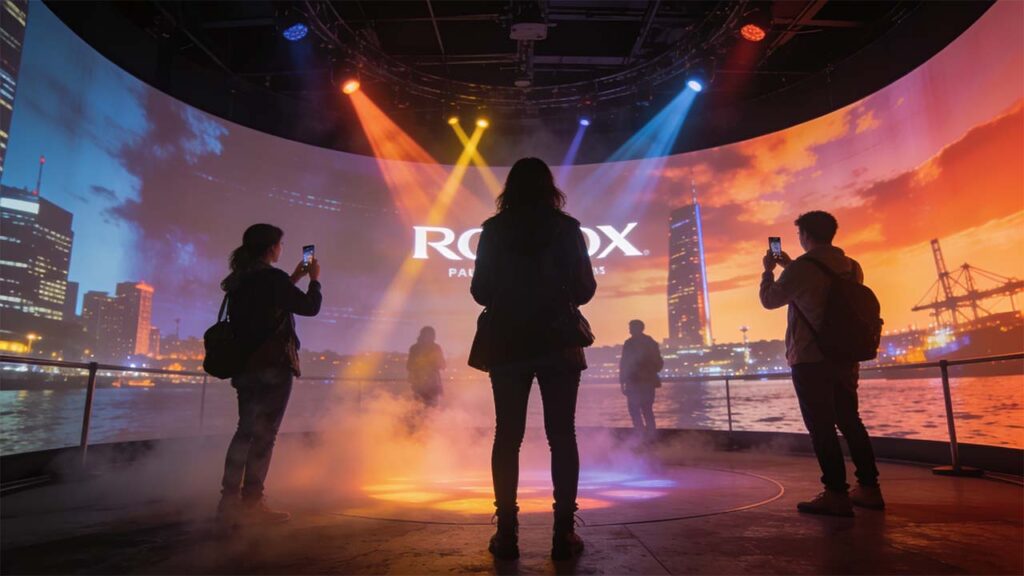
Projection mapping, themed environments, scent, sound, and touch transport visitors into your brand world. Immersive installations photograph beautifully and hold attention far longer than a standard booth — well suited to destination venues and larger CBD or waterfront spaces where you control the environment.

4. Gamification and challenges
Turn engagement into play. A branded challenge, leaderboard, spin-to-win, or AR game gives people a reason to participate, return, and share — while you capture data and dwell time. Games also solve a very practical Singapore problem: they give queueing crowds something to do and keep dwell high without creating a bottleneck.

5. Mobile and roadshow activations
Take the brand to your audience rather than waiting for them. A mobile activation — a branded vehicle, caravan, or sampling cart — lets you hit several high-footfall locations across CBD and heartland in one campaign, adapting the pitch to each catchment. Ideal for launches that need broad geographic reach on a compressed timeline.

6. Influencer and community moments
Build the activation around the people your audience already trusts. Invite creators and community members to experience it first, and design specific moments engineered to be filmed and shared. In a market where local micro-influencers often out-convert big names, casting for relevance beats casting for follower count.

7. Cause and purpose-led activations
Tie the brand to something your audience genuinely cares about — sustainability, local culture, wellness. Purpose-led activations earn goodwill and deeper engagement when they’re authentic and clearly connected to the brand; audiences here are quick to spot and punish tokenism, so the link has to be real.

8. Live demonstrations and masterclasses
Show, don’t tell. A live demo, workshop, or masterclass positions the brand as the expert and gives attendees genuine value, making the interaction feel like a gift rather than a pitch. Works especially well for considered-purchase categories where trust drives the sale.

9. Phygital experiences (physical + digital)
Bridge the on-site moment with the digital world: QR-triggered content, AR filters, instant social sharing, or a follow-up app journey. Phygital is where activation earns its keep in Singapore — it turns a physical stop into a trackable digital lead, and extends engagement well beyond the day itself.
The Singapore realities that make or break an activation
The idea is the easy part. In Singapore, execution lives or dies on a set of practical constraints that catch out brands new to the market:
- Space approvals and lead time. Mall atrium and public-space activations need landlord and, in some cases, authority approval — covering look, structure, build height, footprint, power, and sometimes the activity itself. Prime atriums book out months ahead and set strict rules. Factor approval lead time into the timeline from day one, not as an afterthought.
- Sampling and category rules. Sampling, especially F&B, can be subject to hygiene and licensing requirements, and some product categories face advertising or distribution restrictions. Verify what’s permitted at the specific venue before the concept hardens.
- Crowd flow in tight footprints. Most activation footprints are small and footfall is high, so crowd flow has to be designed deliberately — a clear entry, a path through, and an exit, so a popular activation doesn’t become a blocked walkway the mall shuts down.
- Weather contingency. Outdoor and semi-outdoor activations must plan for heat and sudden rain — shade, wet-weather cover, and a contingency plan aren’t optional in Singapore’s climate.
- Brand ambassador quality. A striking build still converts nothing without trained, on-brand people who can start a conversation and run the interaction. Ambassador quality — briefing, energy, product knowledge — is one of the biggest and most underrated variables in whether footfall becomes leads.
- Lead follow-up. Most activations lose their value in the days after, when captured interest goes cold. Decide the follow-up path — who contacts leads, how fast, with what offer — before the activation opens, not after it closes.
How to measure brand activation success
An activation is only worth the spend if you can show what it achieved. Track a mix of these depending on your objective:
- Reach and footfall — how many people attended or interacted
- Engagement — dwell time, interactions per visitor, repeat participation
- Data capture — sign-ups, leads, opt-ins collected
- Social amplification — user-generated content, hashtag use, shares, earned media
- Conversion — sales, redemptions, or qualified leads attributed to the activation
- Sentiment — qualitative feedback and brand perception shifts
Decide your one or two primary metrics before the campaign so the experience is designed to deliver them.
Common brand activation mistakes to avoid
- Style over substance. A beautiful build with no clear reason to engage won’t convert.
- No data capture plan. If you’re not collecting leads or insights, you’re leaving value on the table.
- Ignoring amplification. The on-site audience is small; the online audience is huge. Design for sharing.
- Weak follow-up. Capture interest, then actually follow up — most activations lose momentum here.
- Forgetting logistics. Permits, manpower, weather contingencies, and crowd flow make or break the day.
Frequently asked questions
Experiential marketing is the broad strategy of engaging audiences through experiences; brand activation is the specific campaign or moment that brings a brand to life and triggers direct interaction. In practice the terms overlap heavily.
It varies widely with scale and complexity — from around $10,000 for a focused mall activation to $80,000+ for a large multi-location campaign with custom fabrication and staffing.
Anything from a single high-impact day to a multi-week pop-up. Shorter activations create urgency; longer ones build reach and allow optimisation across the run.
Absolutely. A focused, well-executed single-location activation can deliver strong engagement on a modest budget — creativity and the right location matter more than spend.
Bring your brand to life with INX
A great activation idea is cheap; landing it in a Singapore mall atrium — approvals secured, build to the landlord’s spec, crowd flow that keeps the walkway clear, ambassadors who convert, and a follow-up path ready before doors open — is the hard part. That’s the part INX is built for. We’ve designed and delivered brand activations, pop-ups, and immersive experiences across Singapore since 2012, with in-house creative, fabrication, and production, plus the local know-how to get the concept approved, built, and live on time.