



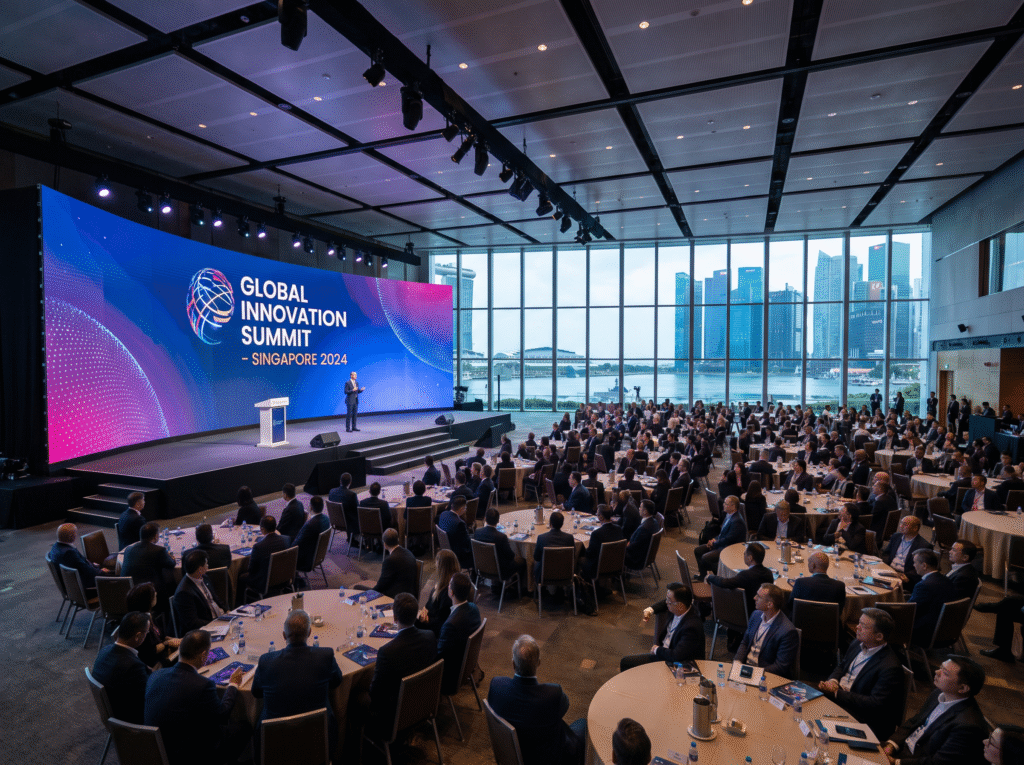
If you are wondering how to plan a conference in Singapore, a six-month runway can be workable for a small to mid-sized corporate event with clear decision-making. A large international, multi-day or exhibition-led conference may need a longer lead time, particularly when venue demand, overseas speakers and complex production are involved.
The 6-Month Conference Planning Timeline
Timeline | Main priority | Key deliverables |
Six months before | Strategy and budget | Objectives, audience, format, budget, team and venue shortlist |
Five months before | Venue and programme | Venue booking, agenda framework, speakers and sponsorship plan |
Four months before | Suppliers and launch | Production partners, registration page, event identity and marketing launch |
Three months before | Operations | Floor plans, AVL design, F&B, delegate flow and speaker coordination |
Two months before | Production readiness | Run sheet, content deadlines, risk plan, staffing and technical checks |
Final month | Confirmation and delivery | Final numbers, rehearsals, briefings, cue sheets and event-day execution |
Six Months Before

Define the conference objectives
Start by deciding what the conference must achieve. Is it intended to educate clients, generate qualified leads, align employees, introduce a new strategy or strengthen an industry community? Set a small number of measurable indicators, such as registrations, attendance rate, sponsor leads, session engagement or post-event satisfaction.
For example, a lead-generation conference may require an exhibition area, appointment scheduling and sponsor data capture, while an internal leadership conference may prioritise workshops, confidential discussions and high-quality livestreaming for regional offices.
Identify the audience and format
Build a working profile of the delegates, including expected numbers, seniority, industries, accessibility needs and whether they will travel from overseas. Then define the format: single-track or multi-track, half-day or full-day, in-person or hybrid, standalone conference or conference with an exhibition.
Create an initial programme structure rather than a detailed agenda. Map the opening, keynotes, panels, breakout sessions, networking breaks and closing segment. This allows the team to estimate room requirements, session capacity, speaker needs and production complexity.
Establish the budget & build the planning team
Split the budget into venue, catering, AV and staging, creative, speakers, manpower and a contingency reserve. Keep a reserve for late changes, additional equipment or increased attendance.
Name one budget owner and a final decision-maker, and bring in a conference management agency early if internal resources are limited.
Five Months Before

Choose a conference venue
When selecting a conference venue in Singapore, look beyond the advertised capacity.
Assess each shortlisted venue against:
- Plenary and breakout-room capacities in the required seating layouts
- Delegate circulation between sessions, refreshments and washrooms
- Loading access, freight lifts, setup hours and teardown restrictions
- Ceiling height, rigging points, power supply and built-in AVL
- Internet bandwidth for registration, event apps and livestreaming
- Accessibility for delegates, speakers and crew
Conduct a site visit with the programme and production leads before signing. Photograph access routes, measure critical areas and request scaled floor plans. The final choice should support the desired delegate experience without forcing the programme into an unsuitable layout.
Develop the programme and speaker list
Turn the initial framework into an agenda with clear themes and session outcomes. Vary the pace through keynotes, panels, workshops, interviews and short presentations. Allow realistic transition and networking time; breaks also give the technical team time to reset rooms and prepare incoming speakers.
Approach priority speakers early and confirm the session topic, duration, format, travel needs and presentation deadline in writing. Identify backup speakers or alternative session formats in case someone withdraws.
Four Months Before

Appoint production partners
Confirm the team responsible for stage design, sound, screens, lighting, video playback, livestreaming, fabrication, branding and on-site show operations. Share the draft programme and venue plans when requesting proposals so suppliers can design around the content rather than quote isolated equipment.
When these elements sit with different suppliers, small gaps tend to appear on the day: a video cue that doesn’t match the script, or a stage that doesn’t fit the screen. This is why many organisers choose a single partner for conference and event management. At INX, for example, the same team handles layout planning, stage design, event branding, AV and lighting, and show calling, so changes are coordinated in one place.
Launch registration and marketing
Build a registration page that communicates the conference value, intended audience, date, venue, programme highlights and speaker information. Keep the form concise while collecting the data needed for operations, dietary requirements, accessibility, consent and lead follow-up.
Three Months Before

Detail the delegate journey
Walk through the experience from arrival to departure. Decide where delegates will queue, check in, collect badges, store belongings, find sessions, ask for help and join networking activities. Plan for peak arrival rather than average traffic.
Create preliminary floor plans for registration, seating, stage, control position, sponsor areas and catering. An experienced conference organiser should also review bottlenecks, emergency access, room turnovers and the separation of delegate and back-of-house routes.
Finalise technical planning
Technical planning should follow the programme. The complete setup must support the content, venue conditions and expected delegate experience rather than treating each piece of equipment as a standalone requirement.
Confirm:
- Stage dimensions, backdrop, lectern and scenic elements
- LED wall, projection or display-screen specifications
- Microphone types and quantities for speakers and audience Q&A
- Lighting for the room, stage and recorded video
- Presentation aspect ratio, playback formats and content deadlines
- Camera coverage, recording, livestream and remote-speaker workflows
- Internet, power distribution and backup requirements
- Rehearsal, soundcheck, setup and teardown schedules
Two Months Before
Build the master run sheet
The master run sheet should show the full conference minute by minute. Include session timing, speaker movements, presentation files, videos, lighting states, microphone assignments, stage changes, catering cues, room turnovers and the person responsible for each action. Keep one controlled version of every supporting document, from contact lists to floor plans, so no one works from outdated information.
Confirm speakers and content
Send every speaker a briefing covering the audience, session objective, duration, format, arrival time, stage setup, Q&A process and technical specifications. Collect biographies, headshots and slides through one organised channel.
Schedule technical checks for remote speakers and flag unusual requirements early. A coordinator from an experienced event management agency can manage speakers, presentations and backstage movement while the client team focuses on delegates, sponsors and stakeholders.
Prepare the risk plan
List the risks most likely to disrupt the day, such as a speaker cancelling, internet failure, a corrupted presentation file or the programme overrunning, and assign someone to handle each one. Keep local backups of all presentations and videos, spare microphones, a manual registration list and a clear escalation process.
Final Weeks
Confirm final numbers for catering, furniture, transport, staffing and production, and close speaker content deadlines so there’s time to format and test every file. Hold one production meeting with the venue and all key suppliers to go through the programme line by line, followed by a walk-through of the venue to confirm positions and access times.
In the last few days, brief every team member on reporting times, contacts and escalation routes. Rehearse the riskiest moments, such as the opening, senior-leader presentations and remote-speaker connections. Check that speakers’ names, titles and walk-on cues are correct.
Event day
Arrive early enough to test the full setup together: audio, screens, lighting, videos, presentations and livestream. Testing each device on its own can miss problems that only appear when everything runs at once. Keep one show-control channel linking the show caller, stage manager, technical leads, venue and client team, and log any timing changes as they happen.
Post-Conference Actions
Send thank-you messages, surveys and approved content while the event is still fresh. Share recordings or presentation materials where permissions allow, and provide sponsors with agreed reports and leads.
Within one to two weeks, hold a debrief covering attendance, budget, engagement, feedback, technical issues and operational lessons. Compare the results with the objectives set six months earlier, then document improvements for the next conference.
Frequently asked questions
For a small to mid-sized corporate conference, six months is usually workable if decisions can be made quickly. Large international, multi-day or exhibition-led conferences often need longer, especially when popular venues, overseas speakers or complex staging are involved. Start with the venue and date, as these shape every other decision.
A conference management agency plans and delivers the conference on your behalf, from venue selection, programme flow and floor plans to stage design, AV, speaker coordination and on-site show operations. Working with one agency reduces hand-offs between suppliers and gives you a single point of contact when changes come up.
Look beyond the headline capacity. Check that the plenary and breakout rooms work in your seating layouts, and that the venue has reliable internet, enough power, suitable ceiling height and practical loading access for production. Always do a site visit with your production team before signing the contract.
Costs depend on the venue, number of delegates, catering, AV and staging, speaker fees, manpower and how many days the conference runs. Multi-room programmes, livestreaming and custom stage builds add to the budget. Set aside a contingency reserve for late changes, and ask suppliers for itemised quotes so you can compare them fairly.
Plan Your Conference With INX
INX brings conference management, creative production, staging, AVL, livestreaming and experienced on-site teams together under one structure, providing a single point of accountability from planning through the final session.