



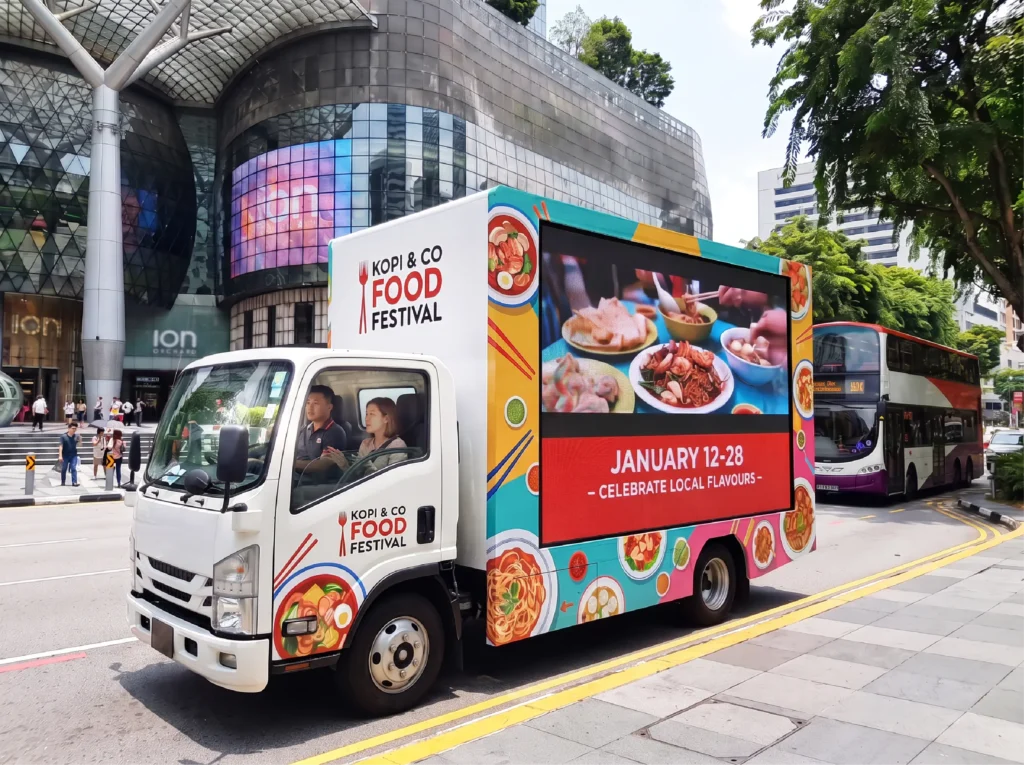
People may scroll past a digital ad in seconds, but a branded vehicle moving through the city, a mobile event space appearing in their neighbourhood or an interactive roadshow can make the campaign feel real before the main event begins.
For brands planning event marketing in Singapore, out-of-home (OOH) formats such as vehicle ads and mobile billboards, combined with on-ground activations, can connect broad awareness with direct participation. The aim is not to replace digital channels. It is to give the campaign a visible physical presence, take the message to relevant locations and create moments that audiences can experience and share.
Why Digital Alone May Not Build Event Buzz
Digital channels are useful for targeting, registration and reminders, but they compete for attention in fast-moving feeds. Even when someone sees an event ad, the campaign may feel distant until there is a physical cue that makes it part of the world around them.
Out-of-home and experiential formats play a different role. A moving display can introduce the event across several locations. A sampling cart can start a conversation by inviting customers to trial the product. A mobile pop-up can give people an experience to share and remember. Together, these touchpoints can turn an event announcement into something tangible.
This is especially valuable when the campaign needs to reach audiences beyond an existing follower or customer database. A route through office districts, retail areas, neighbourhoods or locations near the event can expose the message to people who may not already follow the brand online.
Use Vehicle Ads Before the Event
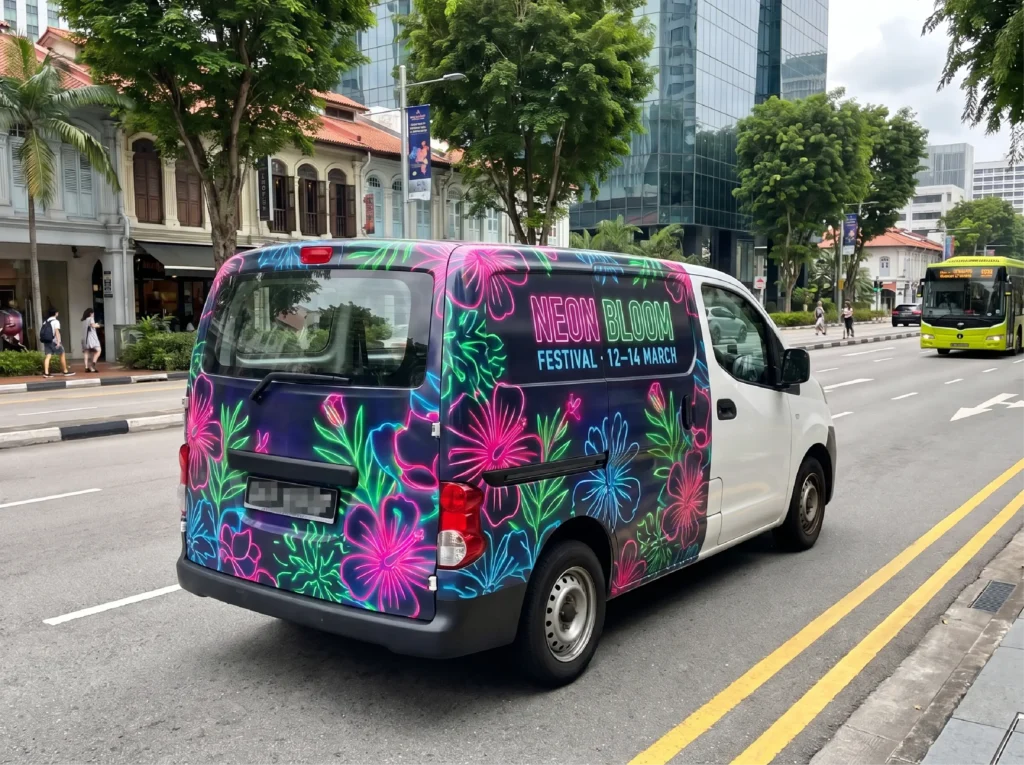
Vehicle advertising is one of the most flexible forms of OOH advertising, adding visibility across the city during the build-up period. Depending on the concept, this may involve a wrapped car, van, truck, mobile billboard or purpose-built activation vehicle.
For brands considering vehicle advertising, the creative should communicate one idea quickly. Use a recognisable visual, short headline, event date and simple action as the viewer only has a few seconds to understand the message.
Plan routes around the audience. A business event may benefit from weekday exposure near commercial areas, while a consumer launch may focus on retail clusters, lifestyle destinations or residential catchments. Repeated appearances across selected locations can help the campaign feel present rather than random.
The vehicle can also support the final push immediately before the event. Route it near the venue, partner locations or complementary activities, and ensure the message matches the latest campaign phase. Early creative may build curiosity; later creative should make the date, location and call to action unmistakable.

Create Impact With Mobile Billboards
A mobile billboard offers a larger visual canvas than a typical car wrap. Static panels work well for a single bold message, while digital displays can rotate through a carousel of visuals to highlight different aspects of the event. The right choice depends on the message, route, campaign duration and viewing conditions.
Many mobile billboards in Singapore can also double as an event truck: a roving promotional display that opens into a stage, product showcase, information point or sampling space at selected stops. Planned stationary periods, where permitted, can give people more time to view the creative and turn pre-event awareness into a more direct encounter, inviting customers to trial the product and be a part of the live brand experience.
For indicative pricing, format comparisons, approvals and operational considerations, refer to INX’s dedicated guide to truck and vehicle advertising in Singapore.

Create Shareable On-Ground Moments
On-ground activations work best when participation feels intuitive. People should quickly understand what they can do, how long it takes and what they receive. A complicated mechanic can reduce participation even if the installation looks impressive.
Useful activation ideas include guided demonstrations, tasting stations, mini challenges, photo moments, live personalisation and interactive displays. The concept should reinforce the event proposition rather than function as an unrelated giveaway.
Design for both the participant and the observer. A clear focal point, visible branding and an activity that can be understood from outside the queue help attract passers-by. If content sharing is important, consider camera angles, lighting, branded backgrounds and the time required to capture the moment.
Promoters also help shape the customer’s experience interacting with the brand. Brief them on the campaign purpose, qualifying questions, product information, registration process and escalation procedures. Their role is not simply to distribute items; it is to help each interaction move towards the intended outcome.

Connect Physical and Digital Channels
Vehicle and on-ground campaigns become more useful when they connect to digital ecosystems. The client’s marketing team can use email, social media, paid advertising and website content to announce routes, reveal upcoming stops and share live updates.
Physical touchpoints can direct people online through a short URL, memorable search term, QR code or registration prompt. Use a destination designed for the campaign rather than sending visitors to a general homepage with no obvious next step.
The message should remain consistent across channels. Someone who sees a mobile billboard and later encounters a social ad should recognise the same campaign immediately. Consistent colour, imagery, language and call to action build continuity between street-level awareness and online conversion.

Measure More Than Reach
Measurement should begin with the campaign objective. If the goal is event attendance, track registrations and check-ins associated with vehicle routes, roadshow stops or activation QR codes. If the goal is product trial, record samples distributed, completed demonstrations, qualified conversations and follow-up actions.
Use unique QR codes, landing-page links, offer codes or forms for different locations where practical. These tools help compare responses without pretending every roadside impression can be counted precisely. Promoter tallies and footfall observations can add useful context.
Also capture qualitative information. Record recurring questions, audience reactions, popular features and operational issues at each stop. These observations can explain why one location or mechanic performed better than another and improve the next activation.
After the campaign, compare outcomes with the original objective, not only the most visible numbers. A smaller activation that produces meaningful conversations or relevant registrations may be more valuable than a busier location with weak audience fit.
Planning Checklist
- Define the event objective and target audience.
- Decide the role of each format: awareness, sampling, demonstration or registration.
- Choose routes and activation stops based on audience behaviour.
- Keep vehicle creative short, bold and easy to recognise.
- Create one clear action for each campaign phase.
- Plan access, power, storage, manpower, weather cover and crowd flow.
- Coordinate physical assets with the client’s digital calendar.
- Set up trackable links, QR codes or location-specific response methods.
- Brief promoters on the message, mechanics and data-capture process.
- Capture both campaign results and on-ground observations.
Frequently asked questions
Vehicle advertising can introduce the event across selected areas, build recognition before launch and reinforce the message near the event date or venue. A vehicle may also support sampling, demonstrations or registration at planned stops.
Prioritise the event identity, one short message, the date and a simple call to action. The creative must be legible quickly, so avoid long descriptions, multiple offers and small details.
Yes. Depending on the format, a vehicle can be configured as a pop-up, stage, showroom, networking pod, sampling station or demonstration space. The layout should be planned around the intended interaction and location constraints.
Begin early enough to secure the preferred vehicle, develop creative, confirm routes and locations, produce branding, arrange manpower and complete any necessary operational checks. Custom builds and multi-stop roadshows require more lead time than a simple branded vehicle deployment.
Bring Your Event Campaign to the Audience
Effective event marketing should connect awareness with action. Vehicle advertising can build visibility across the city, mobile billboards can carry a bold event message, and roadshows or on-ground activations can turn that attention into direct participation.
INX provides vehicle advertising, mobile billboard trucks, mobile sampling carts, roadshows and brand activations, supported by creative, fabrication and event-production capabilities.